
Why Hydrangeas are a Landscaping Favorite:
Hydrangeas are versatile landscaping shrubs used to create soft, romantic borders along walkways, provide lush foundation plantings to hide utility areas, and add vibrant, summer-long color. They are excellent for mass plantings, creating shady woodland effects, growing in containers on patios, and acting as focal points or specimen plants in garden design.

The Five Types of Hydrangeas
Panicle (Hydrangea paniculata)
Popular varieties: Quickfire, Limelight, and Berry White in Zone 3-9
- Bloom: a triangle shaped like an ice cream cone. It could be a dense bloom or a sparse bloom. The bloom starts white and transitions into light or dark pink triggered by cooler temperatures.
- Leaf: oval shape with a toothed edge.
- Sun/Shade requirements: Most sun tolerant of all the Hydrangeas. They can be planted in full sun but appreciate a little afternoon shade
- Bloom time: mid to late summer
Old wood or New wood?: They bloom on new wood. This is great because you can prune it without worrying about making a mistake
Smooth (Hydrangea arborescens) Native species to the eastern US.
Popular varieties: Annabelle, Incrediball, and Flowerful in Zone 3-9
- Bloom: Large snowball or mophead blooms in pink, white or green.
- Leaf: shaped like hearts
- Sun/Shade requirements: Thrive in full sun (in lower zones) giving them stronger stems and larger flowers
- Bloom time: earlier summer
Old wood or New wood?: They also bloom on new wood
Bigleaf (Hydrangea macrophylla)
Popular varieties: Endless Summer, Twist & Shout, and Bloomstruck in Zone 4-9
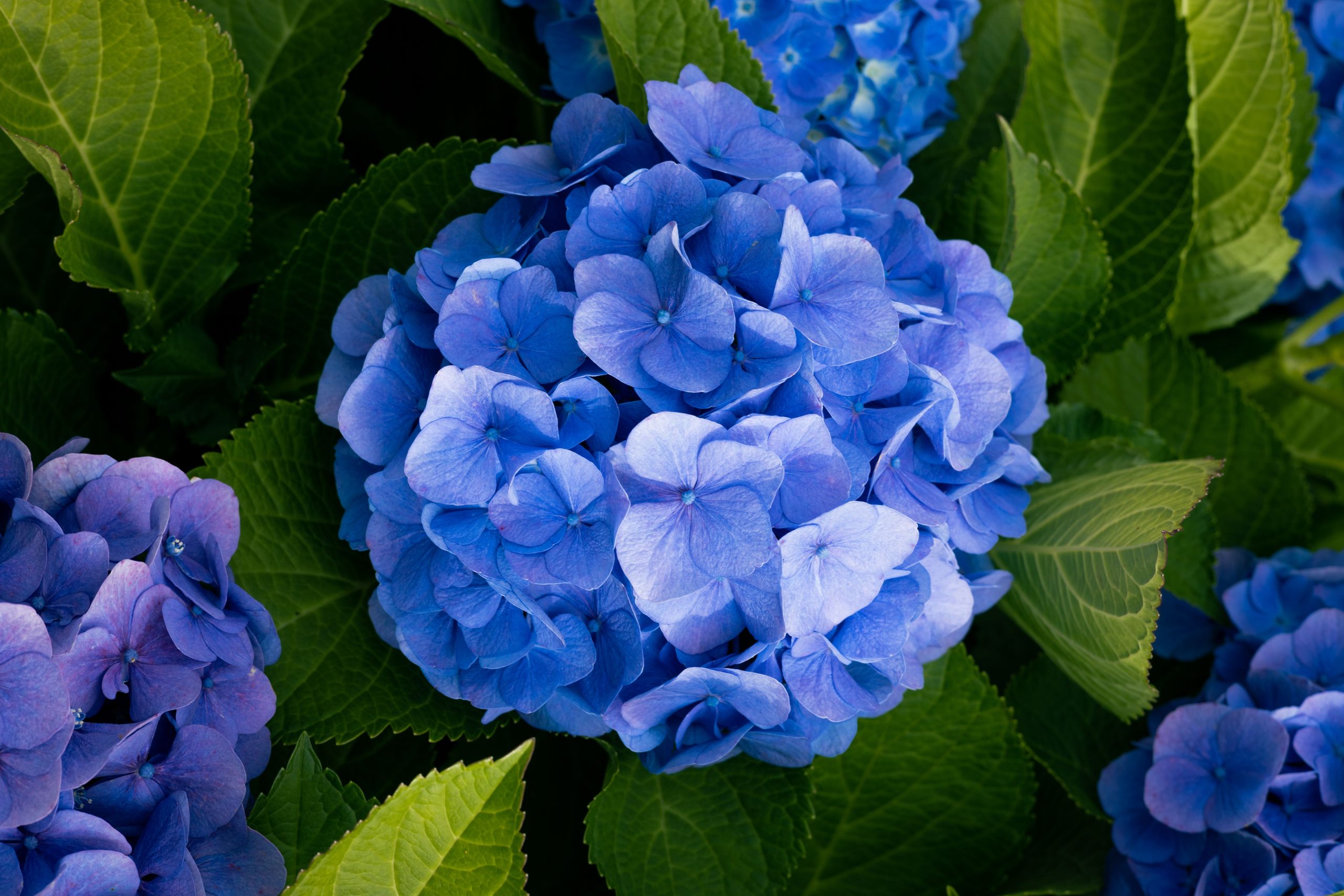
- Bloom: Blooms are either mophead or lacecap disc shaped flowers. The soil pH impacts the color of these flowers. An acidic soil will produce blue flowers. Alkaline soil will produce pink flowers
- Leaf: Big smooth leaves. Macrophylla means large leaf in Latin
- Sun/Shade requirements: They are sun tolerant but they need afternoon shade
- Bloom time: Early summer
Old wood or New wood?: Bloom on old wood
Mountain (hydrangea serrata)
Popular Varieties: Tiny Tuff Stuff, andTuff Stuff in Zone 4-9
- Blooms:The blooms are the lacecap type. The flowers are pink or blue depending on the soil pH
- Leaf: The leaves have a smaller serrated edge.
- Sun/Shade requirements: They will thrive in full sun with afternoon shade
- Bloom time: early to mid summer
Old wood or New wood?: They bloom on old wood
Oakleaf (Hydrangea quercifolia) Native to the southern US
Popular Varieties: Alice, Snowqueen, and Jetstream in Zone 5-9
- Blooms:The flowers are panicle shaped white flowers that turn dark pink or red as the season progresses. Depending on the variety the flowers can be dense or sparse
- Leaf: Quercifolia in Latin means oak like leaves. These leaves are oak leaf shaped and turn red in fall. The branches have exfoliating, peeling bark
- Sun/Shade requirements: Full sun to part shade but most shade tolerant
- Bloom time: Mid summer
Old wood or New wood?: They bloom on old wood


Unsure of which type you have? Quick ID Tips
If you’ve inherited a hydrangea from a previous homeowner or lost the plant tag years ago, you can still figure out what you’re working with by looking closely at the bloom and leaf shape.
- Cone or triangle-shaped blooms + toothed oval leaves → likely a Panicle hydrangea
- Round snowball blooms + heart-shaped leaves → likely a Smooth hydrangea
- Big mophead or flat lacecap blooms + large, smooth, glossy leaves → likely a Bigleaf hydrangea
- Smaller lacecap blooms + small, finely serrated leaves → likely a Mountain hydrangea
- Cone-shaped blooms + oak-shaped leaves + peeling bark → likely an Oakleaf hydrangea
Once you’ve identified your type, you’ll know whether it blooms on old or new wood, and you can prune with confidence instead of guessing.
Why Aren’t My Hydrangeas Blue?
One of the most magical things about hydrangeas, especially the bigleaf varieties (Hydrangea macrophylla), is that their color isn’t fixed. It’s chemistry in action. The bloom color depends on how much aluminum the plant can absorb from the soil, and that absorption is controlled by the PH of the soil.

In acidic soil, or having a pH level below 6, aluminum becomes available to the plant, and the blooms turn that dreamy, saturated blue. In alkaline soil, or having a pH above 7, aluminum gets locked up and unavailable, and the same variety will bloom pink or even a rosy red instead.
So if you’re gardening in Illinois or anywhere else with naturally alkaline soil, don’t expect blue blooms without serious intervention. To shift a hydrangea toward blue, you’d need to lower the soil pH with amendments like aluminum sulfate or elemental sulfur, applied well before the growing season. Even then, alkaline soil has a tendency to creep back toward its natural pH over time, so maintaining blue blooms is an ongoing commitment rather than a onetime fix.
With five distinct types to choose from, there’s a hydrangea suited to nearly every garden style and design goal. The key to keeping your hydrangeas healthy and full of blooms comes down to one simple rule: know your type, know your wood. Once you understand whether your hydrangea blooms on old or new growth, pruning becomes simple, and those big, beautiful blooms you’re after become much easier to achieve.